


Blog
Pros and Cons of Silicone Baby Toys: A Comprehensive Guide for Parents

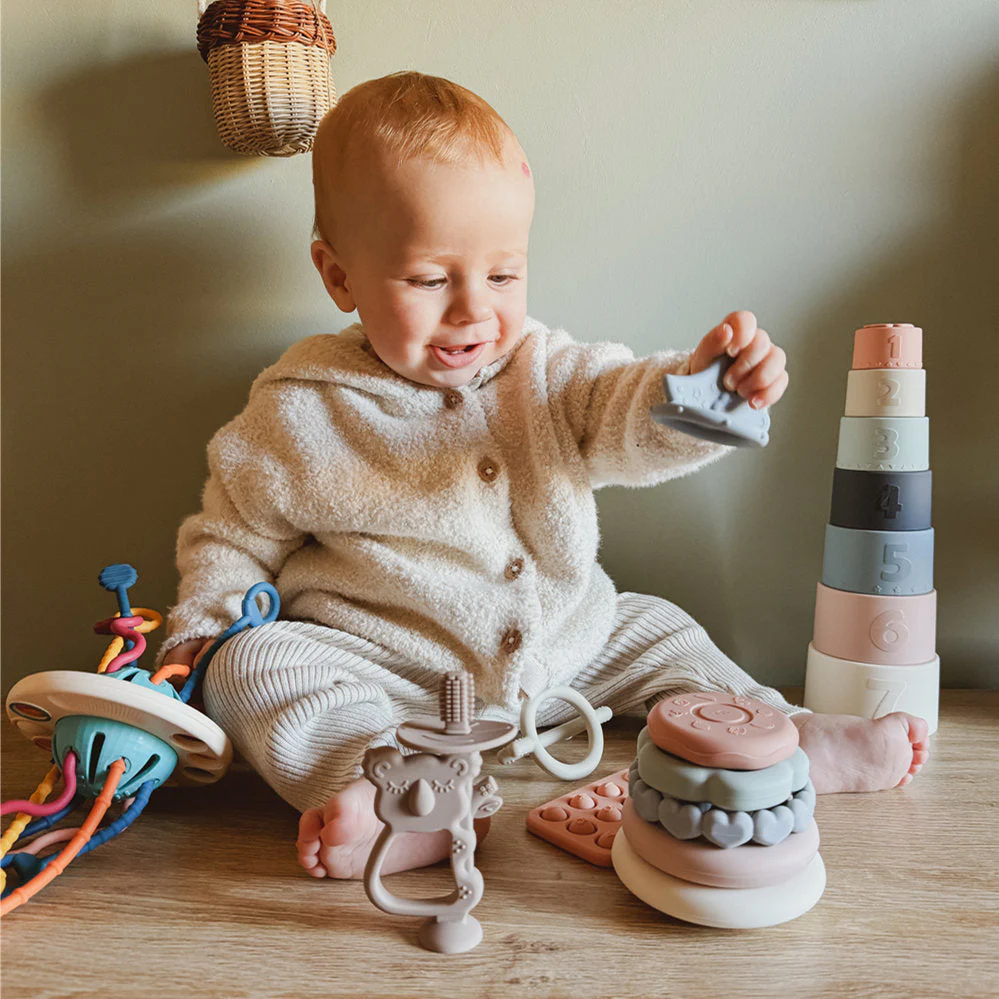
As a parent, you want to provide your baby with the best toys to support their growth and development. With so many options on the market, knowing which materials are safe and beneficial for your child can be challenging.
Silicone is a popular material used for baby toys, but it has pros and cons. On one hand, silicone is easy to clean, non-toxic, and durable. But on the other hand, good-quality silicone toys tend to be more expensive than other options and get hot if left in direct sunlight or near a heat source.
So, do the pros outweigh the cons? Let’s talk about it so you can decide whether you want to give your little one silicone baby toys.
What is Silicone?
Silicon is one of Earth’s most abundant elements. When reacted with methyl chloride and then with water, you get silicone polymers incredibly resistant to high heat and low temperatures. That resistance to temperature makes silicones useful in everything from health care to textiles to transportation to electronics (source).
Construction, tools, cooking, kid toys, a Mars rover—you name it—a type of silicone is likely already employed somewhere in that context. But why? Simply put, silicones can take a lot of heat, cold, and ultraviolet radiation, while also being flexible and moisture resistant (source).
Even more impressive is that the flexibility of different silicones means they can replace less sustainably produced materials in vehicles, electronics, solar panels, keyboards, cell phones, and many, many other modern, everyday conveniences.
Is Silicone Safe for Humans?
Study after study has shown that silicone is indeed safe for humans, from silicone teethers and bottle nipples for babies to surgical implants and cookware (source).
Though made of silica dug out of the Earth, one should consider silicone to be something between synthetic rubber and a synthetic plastic polymer due to how it is created. That’s because factories must process the silica to form silicon, which, after more processing, becomes siloxane (silicone).
Moreover, the backbone structure of silicone is silicone, oxygen, and hydrocarbons, not purely raw, organic material. But this is precisely what makes silicones stable: they don’t break down easily.
Silicone stability is highly sought-after in the medical field, where implants and equipment really don’t need to chemically break down in the midst of an operation or medical procedure. And no one wants anything leaching into a person’s bloodstream, either.
Some silicones are not suitable for human health, particularly low-molecular weight silicones or high-quality silicone that has been filled or mixed with low-quality silicone. Such silicones can actually seep through your skin and build up in your system but are still considered either totally non-toxic or toxic to a very low degree (source).
Is Silicone Safe for Infants?
High-quality silicones, which are high-molecular-weight silicones free of impurities, are considered safe for the medical field. You can also call these “medical-grade silicones.” A step below is food-grade silicones, rated for their stability in cooking and food processing (source). Both of these silicone grades are common in baby products, teethers, toys, and bottles.
But how do you know if a silicone toy is high-quality silicone? Pinch a part of the toy and twist it. If it turns white, then there is likely a filler in the silicone, and therefore, not to par safety-wise. Additionally, if a clear silicone bottle nipple gets cloudy, then it is best to replace it with a new one.